
 EN
EN
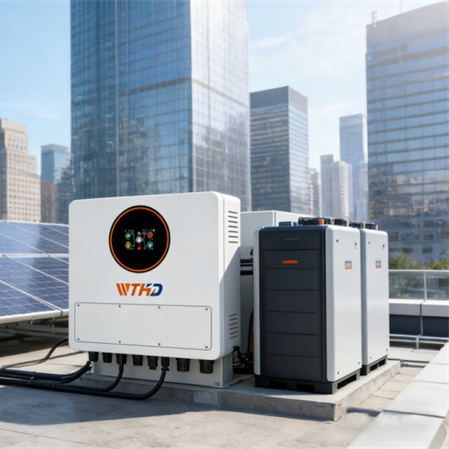
With the world of business rapidly moving towards going green with business operations, the debate about corporate sustainability has been turned into an action rather than ambition. The nucleus of this revolution will not be only the solar panels that are apparent when placed on roofs, but a fundamental element that people usually neglect much, the solar inverter. In the case of products such as the Shenzhen Weitu Hongda Industrial Co., Ltd., offering a high-level inverter technology is not only concerning the conversion of energy but also the ability of corporations to transform the targets of their environmental, social, and governance (ESG) with a certain degree of reliability and intelligence.
Solar Energy Integration for Corporate Carbon Reduction Strategies
In the case of corporations who are determined to minimize their carbon footprint, adoption of an on-site solar generation is the first visible step towards the goal. Nevertheless, the problem of photovoltaic (PV) panel installation is not the only calculation. The real power of carbon reduction is the solar inverter which is the brain of the whole power system. Current inverters do not merely convert the direct current (DC) that a panel produces into the alternating current (AC) that factories and office buildings require but rather maximize the energy it produces.
Through maximum power point tracking (MPPT) technology, the high quality inverters will make sure that all the rays of sunlight are indirectly translated into usable energy with the highest level of efficiency. This maximization of the renewable energy product is a direct replacement of the necessity of grid electricity, which is usually produced using fossil energy. In the case of a corporation, it will result in verifiable carbon abatement. When businesses incorporate smart inverters into their energy mix, it will be able to precisely measure its renewable energy output and report on what it has avoided, decide on the basis of these data to make more precise refinements to their energy usage in order to ensure that their sustainability reports are obtained to reflect real, significant progress.

Energy Storage and Solar Inverters for Green Power Utilization
The intermittency of the solar power is one of the greatest complications in the corporate sustainability. Whenever a factory must operate its night shifts or a data center needs to be cooled all the time, the sun is not always present. This is where the real synergy between the energy storage and the high-developed inverter technology comes to play to the benefit of the green power utilization.
Dual-way hybrid inverted are one of the main concerns of an innovator such as Shenzhen Weitu Hongda Industrial Co., Ltd., which enable corporations to store the surplus amounts of solar energy generated by the sun in times of maximum sunlight in battery banks. Rather than pumping back the surplus energy to the grid inexpensively, companies are able to store this energy and utilize it when the demand is high or at night. This type of capability is commonly known as time-shifting and it makes solar energy self-consumption rate a dramatically high factor. This enables a company to operate on 100%. clean energy with duration of time in a day thus cutting off on the grid dependency and the business is not affected by the fluctuating energy costs. The inverter controls the movement of power among the panels, the batteries, and the facility, making sure that the green energy is made available at the time when it will be required the most, and this fact guarantees the sustainability of the functioning of a company as an entity.

Building Sustainable Energy Infrastructure for Businesses
With a figure of speech of looking beyond immediate energy savings, integrating smart solar inverters is essential in the creation of a resilient and sustainable future energy infrastructure. With corporations growing in body size adding to electric vehicles (EV) fleet and converting heating systems to get off of natural gas, the electrical load on their plants intensifies considerably. This conversion requires a powerful infrastructure which is intelligent as well as adaptive.
The new energy landscape has solar inverters which act as the hub. They enable the smooth addition of distributed energy sources, such as EV charging points and battery-storage, forming a micro-grid of the business campus. Advanced inverters with an islanding feature can be disconnected when the main grid is unavailable and continue to support some vital business functions to use solar and battery power, which increases business continuity. Companies purchase the inverter technology of high quality not only to obtain hardware, but also to secure the future of their operation. They are developing an energy system which is scalable, resilient and can evolve with their sustainability goals and make energy management part of their strategic asset.
