
 EN
EN
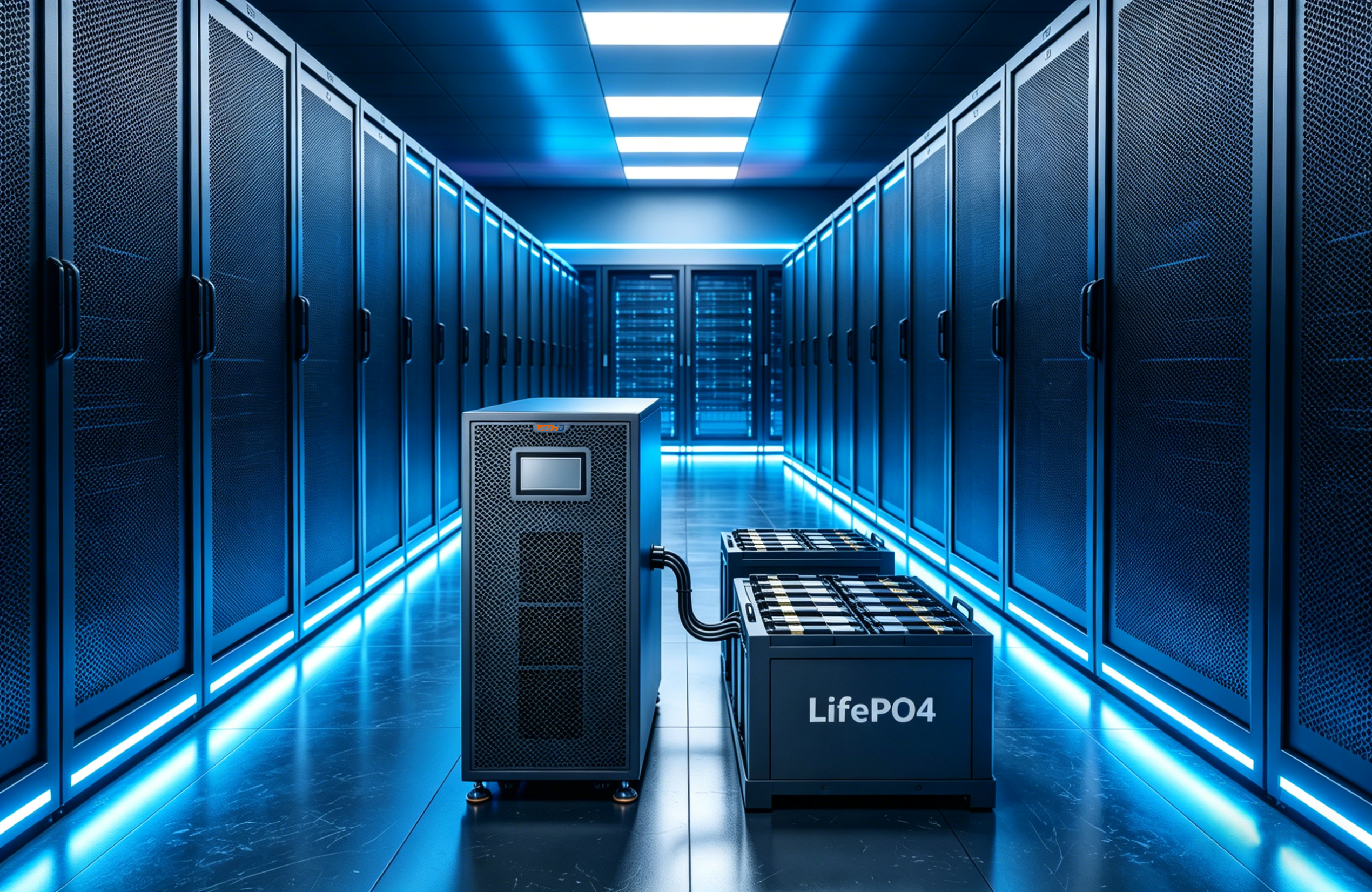
With data centers, telecom facilities, industrial automation, and medical laboratories, business continuity is achieved through uninterruptible power supply (UPS) in case of B2B operations. Battery chemistry determines reliability, cost and efficiency in your UPS. One of the new emerging technologies is Lithium iron phosphate (LiFePO4) which is substituting the old lead-acid batteries. There are three significant reasons why the B2B users are to switch that are discussed below.
Why LiFePO₄ Batteries Improve UPS System Reliability for Critical Operations
In critical operations, a second of downtime is extremely costly. LiFePO4 batteries are superior to lead-acid in cycles life. Compared to a standard valve-regulated lead-acid (VRLA) battery that can supply only a maximum of 300-500 cycles, LiFePO4 can supply 3,000-6,000 cycles under similar conditions. This is a service life of 8-15 years versus 3-5 years in lead-acid.
Another dissimilarity is that LiFePO4 remains constant in voltage during discharge in contrast to lead-acid batteries whose voltage drops with time during discharge. This dependability ensures that sensitive electronic gadgets receive clean and uninterrupted supply of power in times of outages. LiFePO4 chemistry is also thermally stable in nature with ignition temperature of about 518°F (270°C) that is extremely low hence ruling out possibilities of a thermal runaway in a crowded server rooms or distantly located telecom shelters.
Total Cost of Ownership: LiFePO₄ vs Lead-Acid in Commercial UPS Applications
The initial cost of LiFePO4 is higher (typically 20-40 per cent higher than lead-acid), but the Total Cost of Ownership (TCO) is significantly lower over 10 years. Savings of B2B users can be achieved in several points:
Replacement costs: LiFePO4 lasts between 8-15 years, which is equivalent to 2-3 sets of lead-acid batteries.
Maintenance work: LiFePO4 does not require watering, equalization charge or frequent capacity test.
Energy consumption: LiFePO4 can be more efficient at higher temperatures, reducing the HVAC energy consumption.
Potential downtime risk: Reduced battery changes, reduced time to plan the battery change and reduced risk of unforeseen failure.
LiFePO4 can be used in commercial applications with a 10-year payback or longer with a net savings of 30-50 percent over lead-acid despite being costlier to install.
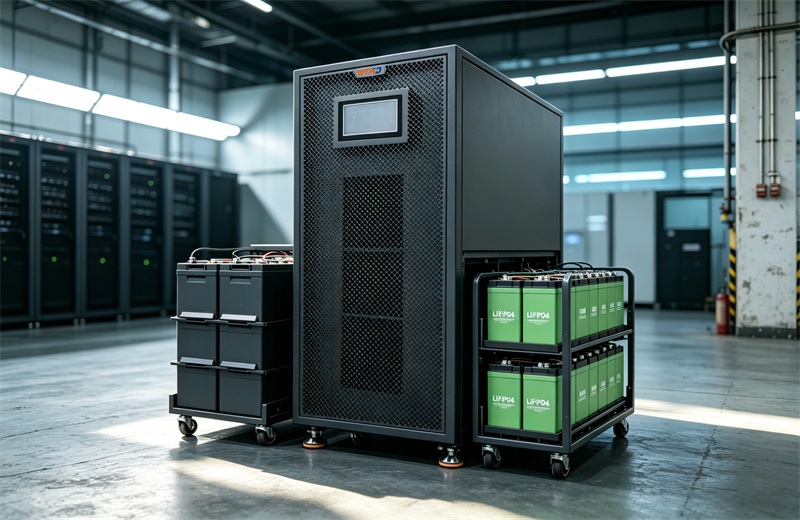
Space Saving and Fast Charging Advantages of LiFePO₄ UPS Battery Solutions
Telecom huts, industrial control rooms and data centers lack space. LiFePO4 batteries can achieve a maximum weight reduction of 60-70 percent and footprint of 30-60 percent of lead-acid at the same run time. This low size also frees up the valuable floor space to revenue-generating equipment.
Fast charging is another vital advantage. Recharge of lead-acid batteries requires 6-12 hours and hence recharge has a long risk window between failures. The LiFePO4 batteries are capable of being charged 100 percent in 1-2 hours; this is much less vulnerable to the back to back power energy. Also, LiFePO4 is also capable of maintaining depth of discharge (DoD) of 80-100 percent, compared to 50-60 in the case of lead-acid. With a LiFePO4 system the operating runtime, i.e. the number of battery cabinets and the capital expenditure per kilowatt of protection are nearly twice that of a comparable rated system.
Conclusion
LiFePO4 UPS batteries offer a higher reliability to B2B customers in terms of greater cycle life, lower total cost of life, and a high space density through quick recharge. Shenzhen Weitu Hongda Industrial Co., Ltd. is the one-stop solution provider of communications, energy, transport, medical and financial infrastructure, be it a standardized UPS that you want or a tailor-made power solution. Call us and today to safeguard your vital power.