
 EN
EN
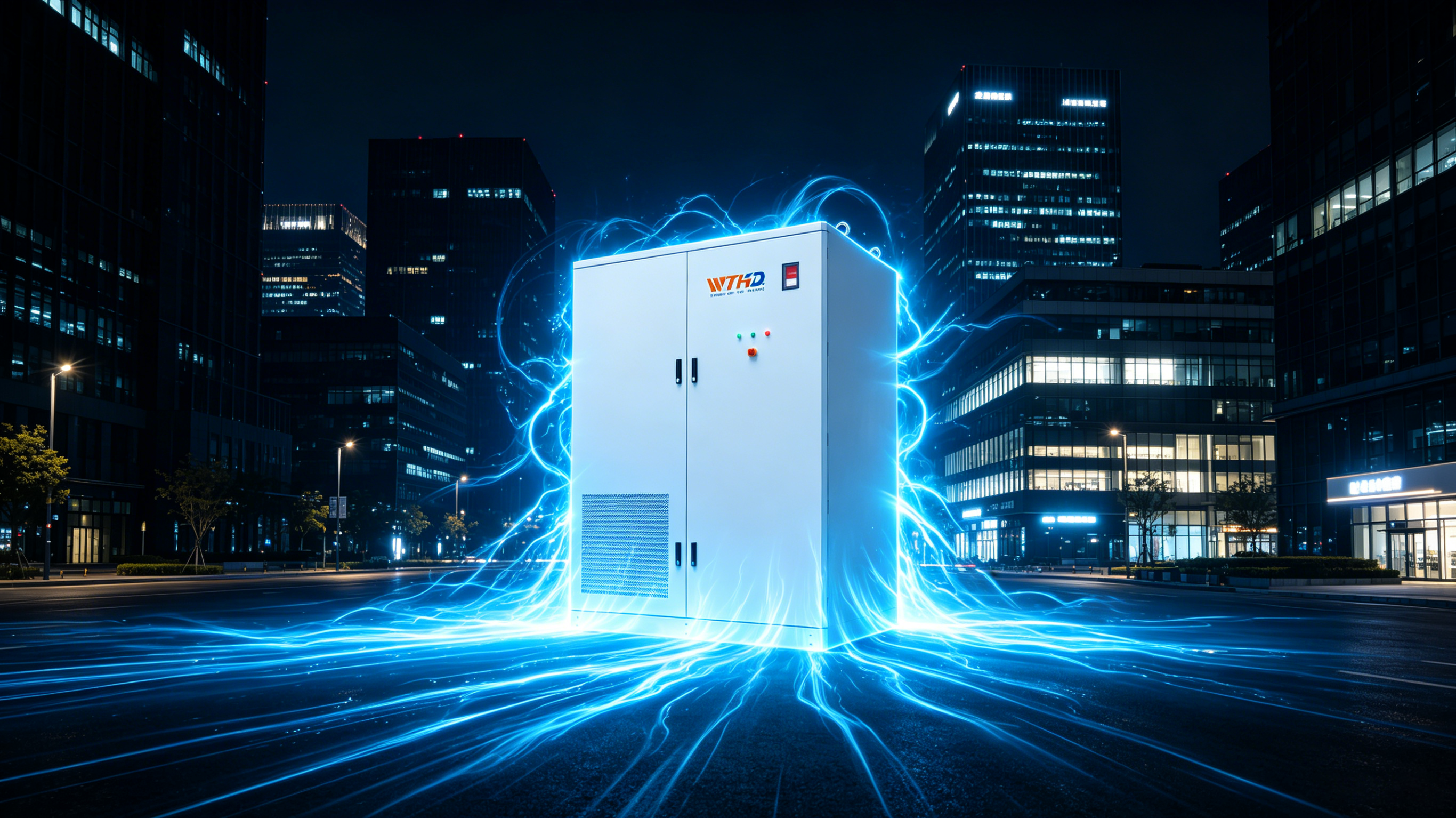
Power reliability is fundamental to modern industry, business and day-to-day life. However, grids around the world are increasingly challenged due to the aging of infrastructure, an increasing prevalence of extreme weather, and growing demands placed upon them. Blackouts, brownouts, voltage fluctuations disrupt operations, destroy equipment and diminish customer confidence. The arrival of Battery Energy Storage Systems (BESS) presents a breakthrough solution. Storing energy when it is plentiful and then providing that energy to a facility when needed, BESS introduces a level of robustness which traditional backup generators cannot achieve alone. Shenzhen Weitu Hongda Industrial Co., Ltd., high tech enterprise accredited to ISO, CE, FCC has been committed to designing and manufacturing energy storage systems, solar inverters and UPS solutions to provide reliable power for industrial, commercial and domestic applications.
Providing Backup Power During Grid Interruptions
BESS provides an instant backup power supply for your critical loads during any interruption of the power grid. In contrast with traditional generators which require starting time (a few seconds) and storage fuel, battery systems operate virtually instantaneously.
Seamless transition: The combination of a BESS and hybrid inverter can detect power outages in an electrical network and switch the facility to island operation—in less than 20 milliseconds. The equipment: computers, industrial controllers and lights can avoid rebooting, resetting or flickering respectively.
Duration flexibility: Battery capacity can be chosen to meet needs ranging from minutes (short bridge power to allow a generator to start), hours or even longer during a power outage.
Silent and emission - free operation: Critical environments such as hospitals, data centers or residential neighborhoods benefit from battery power without producing any sound, exhaust fumes, or a need for fuel supplies.
The industrial and commercial energy storage systems as well as domestic energy storage units of WTHD integrate smoothly with WTHD UPS and solar inverter systems. If your operation can not tolerate any loss of power, BESS would be the primary source of power for the installation and would allow your facility to never even notice a power failure.

Enhancing Energy Stability for Commercial and Industrial Applications
The second main application of BESS beyond uninterruptible backup is the improvement of power quality for facilities sensitive to deviations of voltage sag, swell, frequency , etc. A small sag or swell may last only a few cycles but might be sufficient to trigger PLCs, cause VFDs to trip and sensitive instrumentation to behave erratically.
Voltage and frequency regulation: The inverter in a BESS can inject or absorb reactive power to maintain voltage within narrow bands, even when the grid fluctuates.
Ride - through capability: During a temporary fault to the grid (e.g. lightning strike, sag in power flow), the BESS will then deliver required power in order to "bridge the gap" in electricity for industrial processes.
Harmonic mitigation: Advanced BESS inverters can also reduce harmonic distortion, protecting sensitive electronics and improving overall power factor.
A combination of a BESS, WTHD UPS and a voltage stabilizer is ideal solutions for industrial plants, storage facilities, or communication stations needing a greater level of quality from their power supply than that which would be supplied by the utility alone. These solutions minimize unplanned shutdown, equipment failure and product quality degradation.

The Role of Lithium Battery Storage in Smart Power Infrastructure
Modern battery energy storage systems utilize LiFePO₄ and other Li ion chemistries, a major advancement over obsolete lead acid technology.
High cycle life: A lithium - ion battery is capable of more than 4,000 to 6,000 cycles at 80% depth of discharge. A comparable lead acid battery is rated for 300 to 500 cycles.
Fast response: The low internal resistance allows the lithium - ion battery to discharge at very high currents, ideally suited for applications requiring instantaneous response.
Energy density: Lithium based systems use far less floor space than an equivalent lead acid battery system, making them ideal for a retrofit application in existing electrical room space.
State - of - charge accuracy: The BMS within a BESS will provide highly accurate information to facilitate predictive control and allow for remote monitoring.
WTHD energy storage systems are based on automotive grade LiFePO₄ battery cells complete with integrated BMS, thermal management, and all required ports (RS485, CAN, etc.) which connect to WTHD's solar inverters, UPS and micromodule precision air conditioners for a totally integrated smart power system. Operators are now able to visualize their grid supply, loads and battery status from one point of access and even automatically trigger charging/discharging to optimize cost-related grid charges.

Summary
Battery Energy Storage Systems have gone beyond just an emerging technology; it is an indispensable power reliability solution which is being implemented globally. BESS offers an uninterruptible backup supply during power grid disturbances, the ability to stabilize the power for sensitive industrial and commercial loads, and also the framework for smart power grids of the future through use of advanced Lithium battery technology. Shenzhen Weitu Hongda Industrial Co., Ltd. is equipped with its professional R&D center, multiple technical patents and certifications from ISO9001, ISO14001, ISO45001, CE, FCC and TUV, offering advanced solutions on energy storage systems, solar inverters, UPS and power supply to customers around the world. WTHD is the best partner that can be called upon to help enhance your facility's reliability.