 EN
EN

In today's interconnected business environment, connectivity and digital infrastructure form the skeleton of all commerce and communication. Downtime and data loss cost more now than they ever have before. A disruption in power can mean lost revenue, corruption of sensitive data, reputational damage and other negative impacts. The strategy and protection you need in such times is provided by redundancy within a UPS (uninterruptible power supply). A redundant system is more than simply a second battery: it provides true fault tolerance to keep your systems online.
How Redundant UPS Designs Prevent Unexpected Downtime
At the heart of a redundant UPS configuration is what's known as "N+1" and "2N". Essentially, it means installing one more UPS unit than is required to cover the full critical load. If one UPS unit goes offline or needs to be taken offline for maintenance, the other UPS systems step up and automatically carry the load without disruption. The way it works with the most simple redundant system, an N+1 configuration: there is sufficient UPS capacity to cover full load, and then at least one (1) extra system to cover it should any component of the UPS fail.
It removes the 'single point of failure' inherent in non-redundant UPS systems. Where one UPS fails on a non-redundant UPS system all of the connected critical equipment instantly loses power, which leads to potentially significant lost revenue downtime. The redundant system prevents this by seamlessly swapping the burden to the remaining working module and to all the other redundant modules so effectively that any operator - or even some critical systems - would never know any failure even occurred. This is achieved by not only intelligent hardware but also a complex form of control logic that keeps a close watch on each UPS module, quarantining any found 'unwell' and letting the rest get on with powering essential systems. This is the first line of business continuity defense.

Why Mission-Critical Facilities Depend on UPS Redundancy
There is no industry which can allow itself to miss out even the shortest split second power to the operations. And the levels of importance raise by million percent when we consider some of the most crucial operations around the globe namely the operating systems for the data centers and information storage & networking centers and some other critically significant centers including healthcare units and emergency response centers.
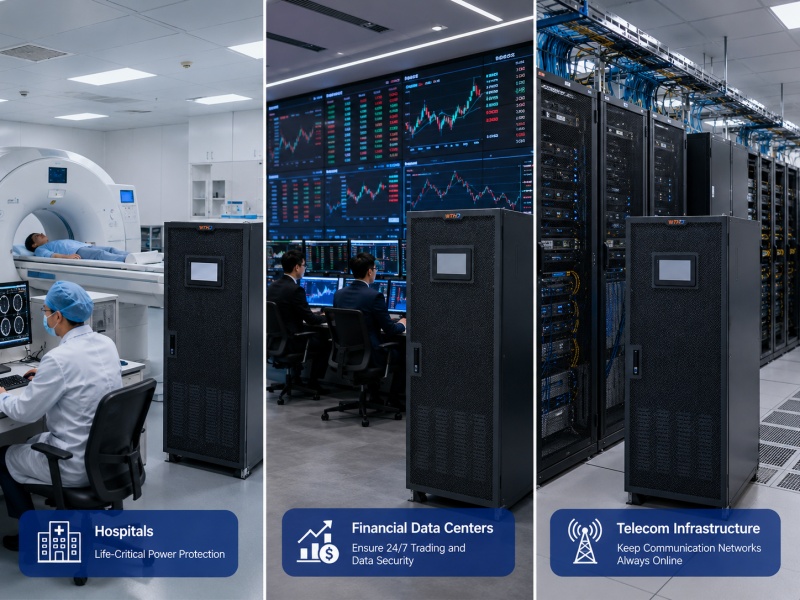
Data Centers: A power failure in the data center could cause server crashes, file and database corruption, as well as a total outage affecting external services. Downtime of a minute, even if it seems so insignificant to most other industries, can cost an enormous facility into the hundreds of thousands of dollars. Redundant UPS systems are an absolute necessity, to keep servers functioning until either a backup generator can kick in, or the main power can be re-established.
Hospitals: In a hospital environment, it is not a metaphor when you say power continuity. This can actually save lives since ventilators, monitors and other life support equipment need continuous uninterrupted, steady supply of power from life saving medical equipment’s. Redundant UPS systems support them in continuous power back-up in the event of power interruption to give you the peace of mind.
Financial Institutions: Because banks, stock markets and payment processing companies demand 100% availability, just a one or two-minute power outage could mean hundreds of millions of dollars in losses for the organization. Redundant UPS system solutions are critical to keeping this complex and demanding financial system running.
In such facilities redundant UPS systems are not merely additional, it means, it constitutes, from a technical perspective, part of the basic structure for an enterprise to remain online.
Simplifying UPS Maintenance While Keeping Systems Online
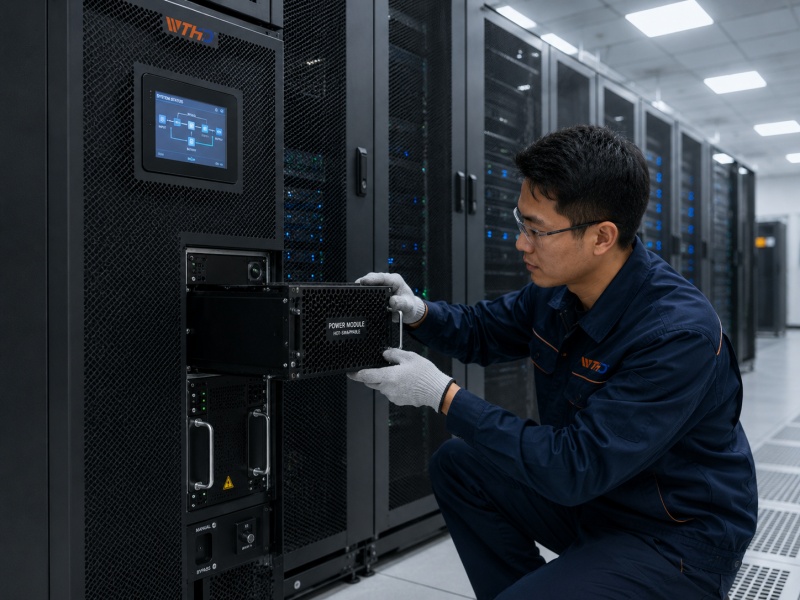
With this redundant UPS configuration, one lesser-known benefit is the maintenance that doesn't involve any downtime to critical loads. In a non-redundant UPS configuration the protected equipment is immediately turned offline whenever some aspect of a UPS needs to be maintained. This often means some schedule able downtime needs to be scheduled which is hard to do with an operation that doesn't ever stop 24/7.
That’s where a parallel redundant configuration solves the problem. The main benefit of parallel redundancy is that each individual UPS module in the parallel array can be isolated and hot-swapped for maintenance, repair or replacement. This ability to isolate and maintain a UPS module without compromising operations eliminates the need to perform UPS servicing during off-peak hours. It also virtually eliminates the maintenance challenges and risk that are often associated with supporting even simple, non-parallel redundant UPS. This “on-the-fly” maintenance potential helps lengthen the overall lifespan and operational viability of the UPS system.
In summary, when it comes to a contemporary business, a redundant UPS configuration is quite essential for disaster mitigation strategies and the continuity of its operations, which not only safeguards their entire operation and protects mission-critical equipment, but also keeps system maintenance much easier, giving firms peace of mind for powering up their business in today’s hyper-linked as well as power-intensive business world. Implementing A UPS Having Redundancy It, is crucial for any business—they must choose A UPS solution that not only fulfils the needs of the organization, but also facilitates redundancy.