
 EN
EN

For EPCs (Engineering, Procurement and Construction), selecting the correct lithium battery provider isn't simply a procurement decision - it's a strategic risk-management decision. In battery energy storage projects, cost overruns, under performance, and failures can very seldom be traced back to a single technological failure. Rather, these factors stem from supplier selection. An improperly selected supplier can result in delayed commissioning, nebulous system integration duties, disputes over warranties, and inflated operational life cycle expenses. All these costs directly affect an EPC's profitability and company profile in the long run-and they are the very risks that the EPC must manage on a fixed schedule and budget. Below are three essential assessment criteria for EPCs to select reliable lithium battery partners to realize project certainty.
Why Manufacturing Capacity and Project References Matter
It begins with the quality of manufacturing. Production capacity determines whether a supplier will meet production schedules on time, deliver the same product day after day, and ramp up production as project needs rise. EPCs need to evaluate the supplier’s vertical integration depth: what portions of your product are internally sourced, at what level quality is being maintained, and whether key assembly stages are performed in-house.
Common indicators that show good manufacturer maturity are defined quality inspection procedures, serial-level traceability and a defined corrective-action process. It is crucial to know whether manufacturers that rely heavily on third-party designs understand the potential failure modes of those designs of such third-party products – which is a red flag to EPCs looking for a stable, predictable partner in their multi-project portfolio.
Project references offer the best proof. ECPs should be interested in the manufacturer's track record in terms of real deployed projects, operating performance, and market confidence reflected in insurer and lender acceptance ("bankability"). Manufacturers with solid history in international deployment will smooth financing road blocks and simplify approval processes. A track record of thousands of projects demonstrates well-understood, efficient commissioning processes, ease of compliance and readiness in all necessary forms and documents-saving time on every step to project closeout.
Key Safety Standards Every EPC Contractor Should Check
It is by way of project references that one's reliability is most demonstrably proven. EPCs will need to look at the manufacturer's record of completed deployments, on-going performance, and importantly, acceptance by lenders and insurers ("bankability"). Manufacturers with extensive track record of deployments abroad can minimize project finance related friction and speed the process of obtaining approval; similarly a global footprint, with tens of thousands of projects installed globally, means such manufacturers have well tested commissioning processes, thorough understanding of regulations, and a developed system for documentation, cutting project cycle time.
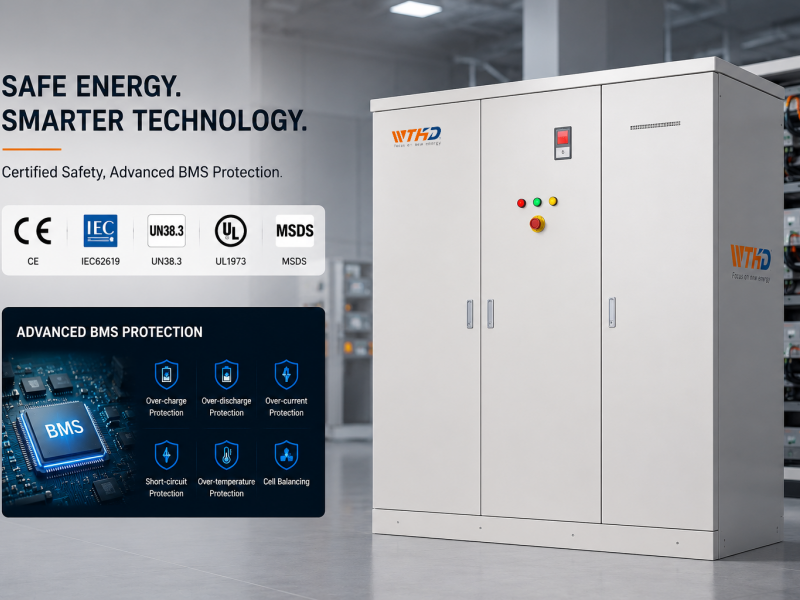
EPCs need to check if there exist certifications relevant in their chosen markets. Major certified can be outlined as follow:
IEC 62619: Standard on thermally abusive, over charge and forced charge of batteries contained therein as well as internally faulty test of lithium batteries used in industrial applications
UL 1973: North American Standard with full testing for stationary storage applications with Thermal Runaway, fire exposure and physical abuse tests
UN38.3: Necessary to assure the safety for shipment of lithium batteries. Although safety has to start on system integration level, all parties will not succeed to assure safety unless it started already by component EPCs should pay attention to safety-by-design in the development of their products with respect to thermal management, detection and suppression of fires, fault isolation and mitigation of the risk for thermal runaways. In fact EPCs may focus on how well the supplier documents the logic behind their safety functionality not just on meeting the safety criteria that is mentioned.
Choosing Battery Partners That Support Projects Beyond Delivery
However, a true sense of a trusted partner’s value may not be understood in full until it’s delivered. And since EPCs might be the ones responsible down the line for plants during the 10-15 year plant lifecycle, after sales technical support/services is a first key purchase decision criteria.
EPCs should review whether the manufacturer provides an array of life cycle services:
Remote monitoring and diagnostics: Real-time data collection from cells, modules, BMS, and PCS to actually detect anomalies before they escalate into failures.
BMS and EMS integration: Self sufficiency on the software is necessary - customers totally dependent on 3rd Party EMS software will experience delays with integrations and confusion over technical ownership.
Spare parts logistics: Parts - Availability with specified lead time and availability in stock by regions and replacement of component units. cells, modules, BMS cards and thermal components.
On-site field service and preventive maintenance: Scheduled tests, and inspections. System check, and repairs. Electrical inspections and testing.
Global/local support presence: The machine users/buyers who had their in house service centers in project region would greatly improve availability/reduced down time on their existing machines.
We recommend that careful consideration is given to the specific structure of longer term warranties. In particular we urge that EPCs assess the quality of capacity retention warranties, assumptions used for modelling the rate of degradation and the method of calculation of a "cycle". Transparency around the approach taken allows for more robust financial modelling and disputes avoided during operation and maintenance period.
About WTHD
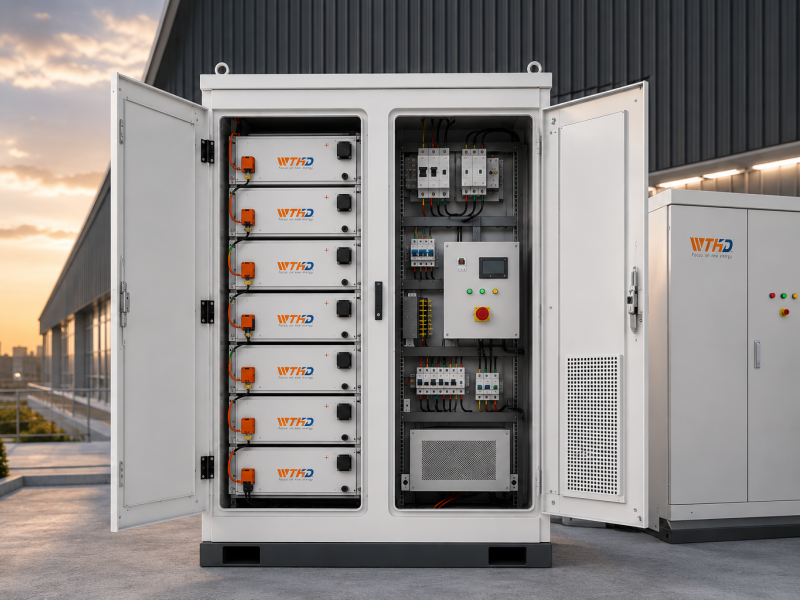
Shenzhen Weitu Hongda Industrial Co., Ltd (WTHD), a national high-tech enterprise focusing on R&D and production of UPS uninterruptible power supply, solar inverter and energy storage system, is currently implementing the strategy of “one headquarters, three bases” among Shenzhen, Foshan and Henan, supporting by ISO 9001, TLC, CE, FCC. If you would like get more information regarding lithium battery for energy storage systems meeting needs from EPC projects, please feel free to contact WTHD’s engineering team.